Choosing a Large Animal Ultrasound Machine is not a simple ranking exercise. It involves image quality, probe durability, software stability, service response, and field usability. A machine may perform beautifully in a hospital, yet struggle beside a muddy cattle pen or a restless horse.
Virginia Reef, DVM, a respected equine imaging specialist, has described ultrasound as “an extension of the physical examination.” That principle remains practical today. The best suppliers support veterinarians who must make careful decisions with limited time, uneven lighting, and animals that rarely remain perfectly still. This overview examines ten major suppliers through that working lens. It considers portable systems, cart-based platforms, linear and convex probes, battery performance, Doppler functions, and after-sales training. Technical specifications matter. So does the technician answering a service call.
The list should not be treated as an absolute verdict. Supplier rankings can change with regional distribution, pricing, warranty terms, and clinical needs. A dairy practice may value rapid pregnancy scanning, while an equine hospital may require detailed tendon imaging and advanced Doppler analysis. That difference is easy to overlook. We also recognize a limitation: published specifications cannot fully reveal long-term reliability in demanding field conditions. Therefore, each supplier deserves practical verification through demonstrations, reference users, and trial scanning. The strongest Large Animal Ultrasound Machine is not always the most expensive model. It is the system that delivers dependable images, sensible controls, and support when the animal, operator, and environment become unpredictable.
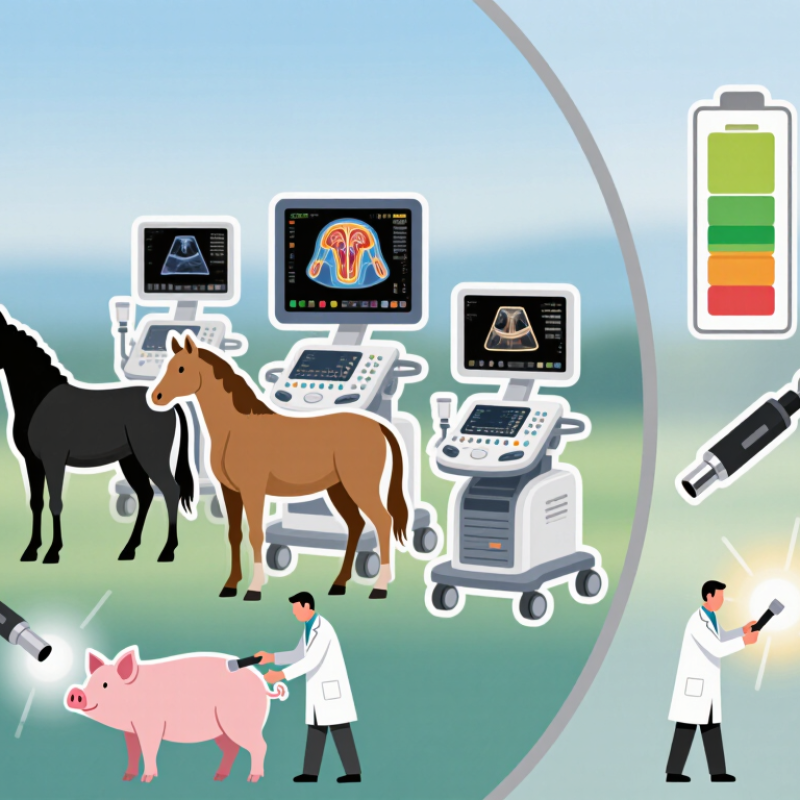
Understanding large animal ultrasound machines starts with the animal, not the screen. These systems support reproductive checks, abdominal examinations, tendon assessment, and urgent veterinary decisions. In field work, portability matters because examinations may happen beside a stall or under changing light. A clear display, sealed housing, long battery life, and suitable probes reduce handling problems. Experienced operators also value balanced controls. Fewer adjustments can mean less stress for both animal and examiner.
Tips: Match the probe to the examination. Use a low-frequency probe for deeper organs and a higher-frequency probe for shallow structures. Apply enough gel to remove air gaps. Clean the probe after every examination. Keep images and notes together. A beautiful image is not automatically a correct diagnosis.
When evaluating a machine, check more than image brightness. Ask about probe durability, battery replacement, software updates, service response, and operator training. A reliable supplier should provide clear technical documents and realistic performance information. Independent veterinary feedback can reveal problems that brochures omit. I have found that simple equipment is often easier to maintain in dusty environments. Still, compact designs may sacrifice screen size or advanced measurement tools. That trade-off deserves careful reflection before purchase. Regular calibration and supervised practice also improve confidence, although neither can replace clinical judgment.
Evaluating China’s leading suppliers requires more than comparing catalog prices. MarketsandMarkets projects the global veterinary ultrasound market to grow from about USD 293 million in 2023 to USD 430 million by 2028. This growth increases competition, but it also makes supplier verification essential. Buyers should examine ISO 13485 certification, electrical safety testing under IEC 60601, and documented quality-control procedures. Certificates alone are not enough.
Field experience should guide the technical review. A cattle scanner needs a durable probe, clear imaging at greater depth, and reliable performance in dusty barns. For equine use, buyers should assess tendon imaging, frame rate, battery endurance, and screen visibility outdoors. The U.S. Food and Drug Administration emphasizes risk-based controls for medical devices, while ISO 14971 supports formal risk management. Suppliers should explain how these principles shape design, testing, and corrective actions.
After-sales service deserves equal weight. Ask for response times, spare-probe availability, software support, operator training, and repair records from comparable farms. The World Organisation for Animal Health highlights accurate diagnosis as part of responsible animal health management. A supplier that shares failure rates and calibration intervals appears more credible than one offering only impressive images. Some evaluations still overvalue low prices. That is a mistake. A cheaper system may create hidden costs through downtime, weak training, or difficult repairs. No supplier is perfect, and buyers should document these limitations before ranking the final ten.
China’s Top 10 Large Animal Ultrasound Machine Suppliers
China’s top 10 large animal ultrasound machine suppliers serve veterinary clinics, breeding farms, research centers, and mobile livestock teams. Their equipment commonly supports cattle, horses, pigs, sheep, and other large animals. Practical buyers should examine probe options, imaging depth, Doppler performance, battery life, and screen visibility under strong barn lighting.
A reliable supplier should provide clear technical documents, operator training, service records, and responsive spare-part support. Dust, mud, vibration, and unstable power can affect daily performance. A rugged case and sealed controls are not minor details. They can protect equipment during field examinations. Buyers should also verify production quality systems, export experience, warranty terms, and local service arrangements before signing a purchase agreement.
From hands-on purchasing experience, image quality alone does not define a useful ultrasound machine. Rectal probes, convex probes, and high-frequency options must match the intended animals and examinations. No supplier is perfect. Some technical descriptions sound impressive but lack independent test evidence. I would request sample images, a live demonstration, and references from comparable farms. Delivery speed may look attractive, yet delayed training or missing accessories can create real costs. A careful comparison often reveals differences hidden behind similar specifications.
The chart presents representative ultrasound frequency requirements for common large-animal diagnostic applications. Lower frequencies provide greater penetration, while higher frequencies offer improved resolution for superficial structures. Values are clinical reference points and do not represent individual supplier or brand data.
When comparing China’s top 10 large animal ultrasound machine suppliers, examine working performance rather than catalog claims. A suitable system should provide clear B-mode images for pregnancy checks, abdominal exams, and tendon assessment. Test a 3.5 MHz convex probe for deep cattle scans and a 5–7.5 MHz linear probe for superficial tissues. A rectal probe can improve reproductive examinations, but its handling comfort deserves careful attention.
Color Doppler helps assess blood flow in vessels, placental areas, and suspected inflammation. Some systems also include power Doppler or pulsed-wave Doppler, although these functions may vary in sensitivity. Compare image depth, frame rate, gain control, zoom quality, and noise reduction under stable and moving conditions. A bright screen matters in outdoor yards. Battery life matters even more. A machine that fails after two hours becomes expensive equipment.
Durability should match real farm work. Look for sealed housings, impact resistance, washable probe surfaces, and practical cable protection. Ask suppliers for operating temperature ranges, battery replacement costs, software update policies, and service response times. Training quality is another useful measure. Clear manuals and remote guidance can prevent incorrect settings during urgent examinations. However, technical specifications can look impressive while field usability remains disappointing. A hands-on trial may reveal slow booting, awkward controls, or poor visibility in sunlight. Do not ignore those details.
China Top 10 Large Animal Ultrasound Machine Suppliers: How to Select the Right Chinese Supplier
The global medical ultrasound market reached approximately USD 8.5 billion in 2023, according to Grand View Research. Portable systems are gaining attention in farm, equine, and veterinary field work. A suitable Chinese supplier should offer more than attractive pricing. Check probe frequency, scanning depth, image stability, battery duration, and performance in dusty environments. For cattle, a 3.5 MHz convex probe may support deeper abdominal examinations. A 5–7.5 MHz linear probe can improve tendon or superficial reproductive imaging. Do not accept unclear specifications.
Supplier verification requires documents and physical evidence. Ask for ISO 13485 certification, IEC 60601-1 safety compliance, IEC 60601-2-37 ultrasound requirements, and ISO 14971 risk-management records. Confirm whether certificates match the exact model. Review production-audit reports, calibration procedures, electrical safety tests, and serial-number traceability. A live video demonstration is useful, but an independent sample test is stronger. Small details matter, including keyboard sealing, probe-cable strain relief, and readable images under outdoor sunlight.
Tips: Request two sample units for side-by-side testing. Test them on the same animal type and preset. Record boot time, battery duration, image depth, and measurement repeatability. Ask for spare-probe pricing and repair response times in writing. MarketsandMarkets identifies point-of-care imaging and compact devices as important growth areas, but this trend can mislead buyers. A lightweight scanner is not automatically durable. I would also question suppliers who promise “zero failure” performance; real equipment needs maintenance, training, and honest service limits.
| No. | Evaluation Dimension | What a Qualified Supplier Should Provide | Recommended Verification Evidence | Suggested Benchmark | Buyer Selection Note |
|---|---|---|---|---|---|
| 1 | Large-Animal Application Fit | Equipment designed for cattle, horses, swine, sheep, goats, or mixed veterinary use, with suitable probes and imaging presets. | Product manual, probe specifications, animal presets, application videos, and reference installations. | At least 2 relevant large-animal applications | Reject suppliers offering only human or small-animal configurations without documented adaptation support. |
| 2 | Ultrasound Imaging Capability | B-mode imaging, color Doppler, power Doppler, M-mode, adjustable gain, depth, focus, and image-storage functions. | Technical datasheet, live demonstration, saved-image samples, and performance test report. | B-mode plus Doppler for routine field work | Prioritize systems that maintain usable image quality at the examination depth required by the target species. |
| 3 | Probe Selection | Linear, convex, micro-convex, or rectal probes matched to reproductive, abdominal, tendon, thoracic, and general examinations. | Probe frequency range, footprint dimensions, connector type, waterproof rating, and compatibility list. | At least 2 application-specific probes | Confirm probe availability and replacement pricing before signing the purchase contract. |
| 4 | Manufacturing Quality System | Documented quality controls covering design, assembly, software, calibration, final inspection, and complaint handling. | Current ISO 13485 certificate, audit scope, quality manual summary, and batch inspection records. | Valid ISO 13485 certification preferred | Verify that the certificate covers the actual manufacturing site and relevant medical-device scope. |
| 5 | Regulatory Documentation | A complete technical file and market-specific documents for the intended country or region. | Declaration of conformity, applicable test reports, user manual, risk-management file summary, and registration support documents. | Documentation aligned with destination-market rules | Do not treat a general certificate as automatic approval in every importing country. |
| 6 | Electrical and Product Safety | Safety design for electrical protection, electromagnetic compatibility, overheating prevention, and routine cleaning. | Applicable IEC 60601-1 and EMC test reports, electrical safety test records, and cleaning instructions. | Test reports from an acceptable laboratory | Check report validity, model number, tested configuration, and laboratory accreditation. |
| 7 | Software and Data Management | Stable operating software, patient or animal record management, image export, backup options, and multilingual support where required. | Software demonstration, export samples, supported file formats, update policy, and cybersecurity statement. | Image export and basic backup included | Confirm whether software updates are free, paid, remote, or dependent on a service contract. |
| 8 | Portability and Field Operation | Rugged housing, manageable weight, long battery operation, readable display, and reliable operation in farm or mobile environments. | Battery test data, operating-temperature range, ingress-protection information, carrying-case details, and field demonstration. | Battery operation of approximately 2–4 hours | Select a configuration based on actual travel distance, power availability, dust, moisture, and cleaning conditions. |
| 9 | Customization and OEM Capability | Ability to customize language, labels, accessories, software settings, packaging, and documentation without compromising compliance. | Customization list, minimum order quantity, sample approval procedure, engineering change process, and ownership terms. | Written specifications before mass production | Require a signed approval sample and define which changes trigger new testing or regulatory review. |
| 10 | After-Sales Service and Total Cost | Clear warranty, technical training, remote diagnosis, spare-parts supply, repair procedure, and transparent shipping terms. | Warranty certificate, service-level agreement, spare-parts price list, response-time commitment, and training plan. | At least 12-month warranty preferred | Compare purchase price, probe replacement, freight, customs, training, downtime, and long-term maintenance costs. |
Review certification, electrical safety testing, quality procedures, warranty terms, and export experience. Certificates alone are not enough. Ask for evidence.
Cattle scanners need durable probes, deep imaging, and dependable performance in dusty barns. Strong penetration helps examine tissue beneath thick body areas.
Check tendon imaging, frame rate, battery endurance, and outdoor screen visibility. Bright sunlight can make a weak display difficult to use.
Rectal, convex, and high-frequency probes serve different examinations. Match each probe to the animal, body area, and required imaging depth.
Ask about sealed controls, rugged cases, dust resistance, vibration testing, and unstable-power protection. Mud happens. Field design matters.
Confirm response times, spare-probe availability, software assistance, operator training, and repair records. Missing accessories can delay daily examinations.
A live demonstration reveals handling, image clarity, battery behavior, and screen performance. Comparable farm references show whether claims survive real conditions.
Not always. Downtime, weak training, difficult repairs, and replacement parts can create larger costs later. I used to underestimate this.
Compare image quality, probe options, service records, delivery reliability, technical evidence, and total operating costs. No supplier is perfect. Document limitations before deciding.
This article provides a practical overview of the Large Animal Ultrasound Machine market in China, explaining how these systems support veterinary diagnosis, reproductive management, and herd health monitoring. It introduces the key functions of large animal ultrasound equipment, including image quality, portability, probe selection, battery life, software capabilities, durability, and ease of operation in demanding farm or field environments.
The article also presents a structured evaluation of China’s top 10 supplier categories without focusing on individual brand names. It compares product features, imaging technologies, customization options, quality control, technical support, certifications, delivery capacity, and after-sales service. In addition, it offers guidance on selecting the right Chinese supplier by considering animal species, clinical application, operating conditions, budget, training needs, and long-term maintenance. This approach helps buyers make a balanced and informed purchasing decision.

EACENIC SCIENCE & TECHNOLOGY