Top Goat Ultrasound Machines for Sale Worldwide

Time:2026-10-02 Author:Ethan
0%

Choosing the right Goat Ultrasound Machine can improve reproductive checks, pregnancy monitoring, and herd management. This guide introduces reliable models available through international suppliers and specialized veterinary equipment dealers. It focuses on real working conditions, not attractive product photos alone.

A useful comparison examines image clarity, probe frequency, battery life, screen brightness, portability, and resistance to dust. For many goat farms, a compact unit matters more than a large hospital-style console. A clear scan beside a handling pen can save time. Waterproof probes and washable surfaces also support practical field hygiene. Users should check whether the machine includes a suitable transducer for small ruminants. Not every probe performs equally well on thin or heavily muscled animals.

Price is only one part of the decision. Warranty coverage, software updates, training, spare parts, and technical support can determine long-term value. Regional voltage standards and import requirements also deserve careful review. Product availability may change without notice. Some online listings provide limited specifications, which makes direct supplier verification essential. No ranking is perfect. A machine praised by one breeder may frustrate another because farm conditions differ. Veterinary guidance remains important when interpreting images or making reproductive decisions. This overview will compare leading options by performance, usability, durability, and worldwide purchasing considerations, helping buyers choose equipment with greater confidence and fewer expensive surprises.
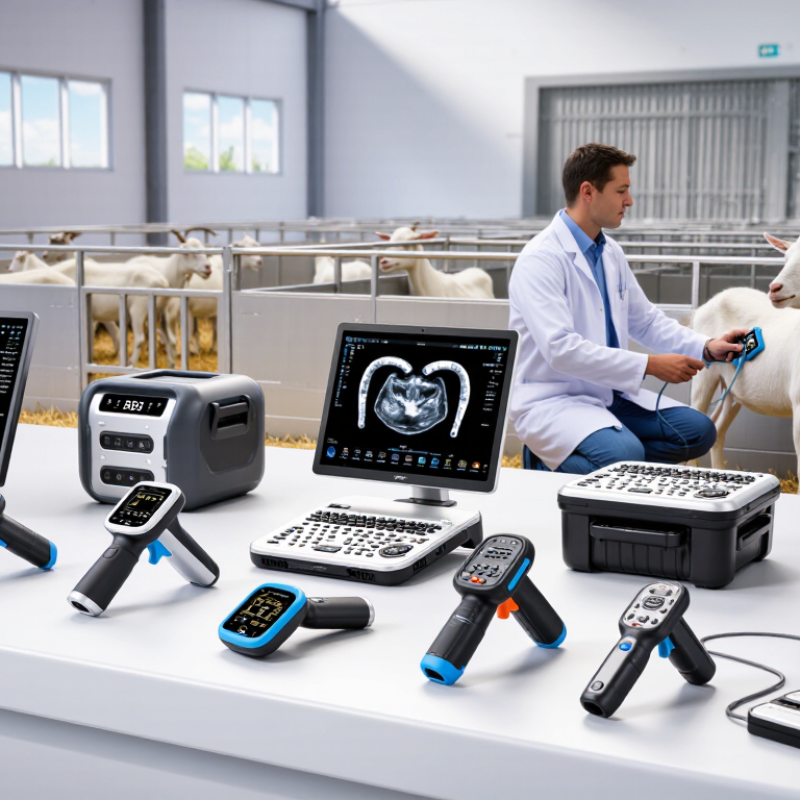
Top Goat Ultrasound Machines for Sale Worldwide

Goat Ultrasound Basics: 3.5–7.5 MHz Probes and B-Mode Imaging

Goat Ultrasound Basics: 3.5–7.5 MHz Probes and B-Mode Imaging

Choosing a goat ultrasound machine starts with the probe, not the screen. A 3.5 MHz probe can reach deeper tissue in mature or heavily muscled goats. It usually provides a wider field for abdominal checks and later pregnancy assessment. A 5.0 MHz probe offers a practical balance between depth and image detail. For early pregnancy work, many technicians prefer a 5.0–7.5 MHz probe. Higher frequencies show clearer superficial structures, but they lose strength at greater depths.

B-mode imaging displays tissues as different shades of gray. This helps an experienced operator identify fluid-filled areas, fetal structures, and changing uterine patterns. Bright echoes may indicate bone or dense tissue. Dark areas often represent fluid.

Clean images still depend on good contact, correct probe pressure, and careful restraint. Use warm gel and remove thick debris from the skin. Small details matter.

In field conditions, a portable unit should tolerate dust, movement, and repeated cleaning. Battery life also deserves attention. A weak battery can interrupt an important examination. I have found that image quality alone can mislead inexperienced users. Probe angle, animal position, and operator training affect the result. Even skilled users may misread early scans. Record the date, probe frequency, findings, and uncertainty. That simple habit supports more reliable herd decisions and encourages a second examination when the image remains unclear.

Pregnancy Scanning Standards: Diagnosis from About 25–30 Days

For goat producers, pregnancy scanning usually begins around 25–30 days after breeding. A portable B-mode ultrasound machine can identify fluid-filled uterine structures and, later, fetal movement. However, early images remain small and easy to misread. The Merck Veterinary Manual describes transrectal and transabdominal ultrasonography as reliable tools when timing, restraint, and operator skill are appropriate.

The day-25 rule is useful, but not absolute. That nuance matters. A 2023 review in Small Ruminant Research reports that diagnostic accuracy improves as gestation advances, especially after 30 days. At 40–50 days, fetal structures are generally clearer, and operators can often assess litter size more confidently.

Still, equipment quality affects results. A machine should provide stable imaging, suitable probe frequency, adjustable gain, and sufficient battery life for field work.

FAOSTAT 2023 data show that goats remain a major livestock resource worldwide, with the global population exceeding one billion animals. Efficient pregnancy diagnosis can help reduce wasted feed, improve kidding preparation, and identify animals needing closer observation. In practice, I prefer scanning at about 30 days, then rescanning uncertain cases later. Early diagnosis saves time, but false confidence causes problems. Training records, clean probe handling, calm restraint, and veterinary oversight remain essential.

The image is evidence, not a guarantee.

Top Machine Types: Portable, Wireless, Doppler, and Veterinary Systems

Top Goat Ultrasound Machines for Sale Worldwide

Portable goat ultrasound machines are practical for farms with scattered pens or pasture-based herds. Their light weight allows scanning beside a handling crate. Choose a clear display, replaceable battery, and a probe suited to small ruminants. Depth control matters. A weak image can hide early pregnancies or create false confidence. Field users should clean the probe after every animal and record findings immediately. Small details improve consistency.

Wireless systems reduce cable damage and make movement easier during examinations. However, wireless signals may weaken near metal fencing or crowded equipment. Test the connection before purchase. Doppler machines add blood-flow information, which can support fetal assessment and reproductive monitoring. They require careful interpretation. Doppler is not a substitute for proper positioning, training, or a complete clinical examination.

Veterinary ultrasound systems usually offer stronger imaging, multiple probes, data storage, and longer operating sessions. They fit breeding centers, veterinary clinics, and farms managing large goat populations. Ask about calibration, waterproofing, software updates, technical support, and compatible chargers for your region. A lower price may become expensive when repairs take weeks. I have seen operators focus too much on screen size and overlook probe quality. That choice can reduce useful detail. Training remains essential, even with advanced equipment. No machine removes human error.

Global Buying Metrics: Battery Life, IP Ratings, Weight, and Probe Depth

Top Goat Ultrasound Machines for Sale Worldwide

Global buyers should compare battery endurance under real scanning conditions, not only advertised standby time. The WHO Global Model Regulatory Framework for medical devices stresses performance verification and traceable technical documentation. A practical target is four to six hours of active scanning, allowing for cold starts, wireless transfer, and repeated image saving. Battery chemistry, replacement access, and charging time matter during mobile herd visits. Field experience shows that a “full day” rating can shrink quickly in cold weather.

Ingress protection is another buying metric. IEC 60529 defines IP ratings, but the rating does not prove resistance to disinfectants or pressure washing. For farm work, IP54 offers basic dust and splash protection, while IP65 provides stronger protection against dust and water jets. Confirm the manufacturer’s cleaning instructions. Standards do not replace judgment.

Weight affects scanning posture. A unit near 1.5 kilograms is easier to carry between pens, though a lighter device may sacrifice connectors or screen size. Probe depth should match the animal and examination site. Superficial pregnancy checks may need 6–8 centimeters, while deeper abdominal imaging can require 10–15 centimeters. Reports from the American Institute of Ultrasound in Medicine emphasize choosing transducers for the clinical task, not marketing language.

Tips: Request raw battery-cycle data, IP test conditions, probe frequency, and tested maximum depth. I would also test the device with wet gloves. Small oversights become expensive.

Safety and Value: CE/FDA Compliance, Training, Warranty, and Scan Cost

Top Goat Ultrasound Machines for Sale Worldwide

Safety and value begin with verifiable compliance, not a promising product page.

In the United States, FDA clearance is device-specific, while CE marking confirms conformity with applicable European requirements. Under EU Medical Device Regulation 2017/745, manufacturers must maintain technical documentation and post-market surveillance.

FDA guidance also highlights Mechanical Index and Thermal Index for monitoring acoustic output.

AIUM’s 2023 safety statement reports no independently confirmed harmful effects from diagnostic ultrasound at permitted levels, but recommends prudent exposure. Use the lowest practical setting.

Training affects results more than many buyers expect.

Published studies in Small Ruminant Research frequently report pregnancy-diagnosis accuracy above 90% with trained operators. An inexperienced user may miss an early pregnancy, waste feed, or repeat a scan.

Short practical training should cover probe placement, restraint, image storage, cleaning, and basic reproductive anatomy.

A certificate alone is not enough.

Warranty terms need close reading.

Check probe coverage, battery life, software support, repair location, and shipping responsibility.

Scan cost includes more than purchase price. Divide equipment cost by expected annual scans, then add service, training, travel, and operator time. A simple calculation exposes false bargains.

I would still question any “maintenance-free” claim.

Dust, cracked cables, weak batteries, and careless cleaning eventually appear. A lower-priced unit can become expensive when repairs interrupt farm visits.

FAQS

Which probe frequency suits a goat ultrasound examination?

A 3.5 MHz probe reaches deeper tissue in mature, muscular goats. It also helps with abdominal checks. Higher frequencies provide sharper superficial images but lose depth.

Is a 5.0 MHz probe a practical choice?

Yes. It balances penetration and image detail. A 5.0–7.5 MHz probe often suits early pregnancy scanning.

What does B-mode imaging show?

B-mode creates a grayscale picture of body tissues. Dark areas often represent fluid. Bright echoes may indicate bone or dense tissue.

When can pregnancy scanning usually begin?

Scanning often begins around 25–30 days after breeding. Early images can be tiny and unclear. Around 40–50 days, fetal structures usually appear more clearly.

Can an early scan confirm pregnancy with complete certainty?

No. Timing, probe angle, restraint, and operator experience affect accuracy. The image is evidence, not a guarantee.

How should the goat and probe be prepared?

Remove thick debris from the skin. Use warm gel and maintain steady probe contact. Calm restraint helps reduce movement and blurry images.

What features matter in a portable ultrasound unit?

Look for stable imaging, adjustable gain, suitable probe frequencies, and strong battery life. The unit should tolerate dust, movement, and repeated cleaning.

What should an operator record after scanning?

Record the examination date, probe frequency, findings, and uncertainty. A short note supports later comparison. Unclear cases deserve another scan.

Can ultrasound help with herd management?

Pregnancy diagnosis may reduce wasted feed and improve kidding preparation. It can also identify goats needing closer observation. Still, inexperienced users may feel too confident.

Conclusion

Choosing the right Goat Ultrasound Machine starts with understanding the basics of caprine imaging. Probes in the 3.5–7.5 MHz range support different scanning depths, while B-mode imaging provides clear real-time views for routine examination. Pregnancy diagnosis can often begin at approximately 25–30 days, depending on animal condition, operator skill, and equipment performance. Buyers can choose among portable, wireless, Doppler, and broader veterinary systems according to herd size, mobility needs, and diagnostic requirements.

For worldwide purchasing, practical specifications are as important as image quality. Battery endurance, waterproof or dust-resistance ratings, overall weight, and probe depth affect convenience in farm and field environments. Buyers should also evaluate electrical and regulatory compliance, staff training, warranty coverage, technical support, and the estimated cost per scan. A reliable system should balance portability, durability, ease of use, and long-term value while helping users perform safe, efficient, and consistent reproductive management.


Ethan

Ethan

Ethan is a seasoned marketing professional with a deep expertise in our company's innovative product line. With a passion for sharing knowledge and insights, he takes the lead in regularly updating our corporate blog, where he explores industry trends, product features, and effective marketing......