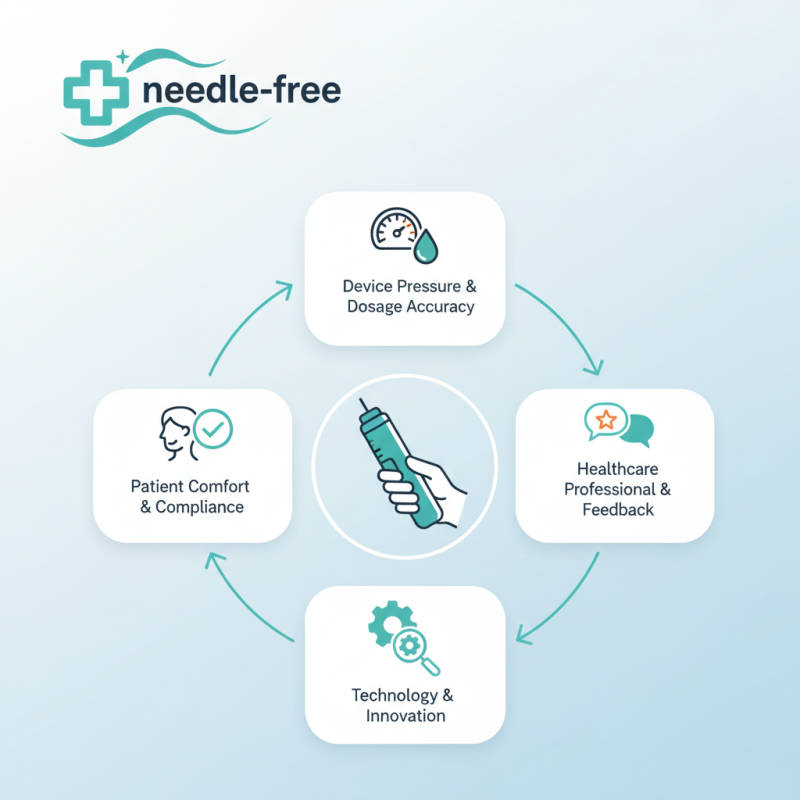
Choosing the right Needle-Free Injector can significantly impact patient comfort and treatment effectiveness. As Dr. Emily Carter, a leading expert in medical device technology, emphasizes, "A well-suited injector can enhance patient compliance and minimize anxiety." Her insights speak to the importance of selecting an injector that meets specific healthcare needs.
When navigating the market, consider key features such as device pressure and dosage accuracy. Not all injectors are created equal, and choosing one that fits your requirements is critical. It’s essential to evaluate the technology used in various models. Innovations can offer advantages, but they may also complicate the user experience.
Reflect on the feedback from healthcare professionals and patients alike. User experiences can reveal strengths and weaknesses of different injectors. This knowledge can guide you toward a more informed choice. Embracing both the benefits and limitations of Needle-Free Injectors is crucial for finding the right solution for your needs.
When selecting a needle-free injector, several factors come into play. Your specific needs, whether for personal use or clinical applications, are essential to consider. Look at the types of medications or vaccines you plan to administer. Different injectors may have varying capabilities. The injector's power source also matters. Battery-operated models offer portability, while plug-in versions may provide consistent power.
Tips: Always check the injector's pressure settings. Too high pressure might lead to discomfort or wasteful dosing. User-friendly designs are ideal, especially for those new to needle-free systems. Ease of cleaning and maintenance should not be overlooked, as this impacts longevity.
Another critical aspect is the injector’s size and weight. A compact design allows for ease of handling. If the injector is too heavy, it may lead to user fatigue. Consider the level of training required. Some injectors are simple enough for anyone. Others may require professional training, impacting your choice.
Tips: Read user reviews to gauge reliability. Feedback on comfort levels and ease of use is invaluable. Look for devices with robust safety features to prevent misuse or accidental dosing.
Needle free injectors offer a revolutionary way to administer medications. These devices eliminate the need for needles, providing a less painful experience. There are various types of needle free injectors designed for specific applications. Understanding these types can help you select the best one for your needs.
One popular type is the gas-powered injector. This device uses a high-velocity gas jet to deliver medication through the skin. It's often used for vaccinations and hormone therapies. However, it can be more challenging to use for very precise dosing. Another type is the spring-loaded injector, which provides a more controlled delivery. It is suitable for patients with special needs or for those requiring multiple injections.
The choice of injector should consider the user’s comfort and medical requirements. Some injectors are better suited for children, while others may work best for adults. The design and ease of use of the device become crucial. It's essential to reflect on the specific context in which the injector will be used. Researching thoroughly can provide valuable insights into the best option.
Needle-free injectors utilize advanced technology to deliver medications without traditional needles. These devices use high-pressure mechanisms to inject drugs through the skin, making the process less painful for patients. The global needle-free injector market is expected to reach $6.53 billion by 2026, growing at a CAGR of over 12%. Such growth indicates a rising acceptance and demand for this technology.
The underlying technology often involves a jet injector system. This system creates a fine stream of liquid that penetrates the skin barrier. According to a recent study, these injectors can effectively deliver vaccines and other biological agents. However, they do require user training to ensure accurate dosing. Additionally, some healthcare professionals express concerns about variability in injection depth and pressure, which can affect the overall efficacy of drug delivery.
Clinical evidence shows that needle-free injectors can enhance patient compliance. Many patients report reduced anxiety and fear associated with injections. However, there’s still skepticism in certain medical communities. Understanding the nuances of needle-free technology is crucial for both providers and patients. While many technical advancements have been made, ongoing research and education are necessary to address remaining challenges in the field.
| Feature | Description | Best For | Price Range |
|---|---|---|---|
| Delivery Speed | Quick delivery of medication, typically within seconds. | Patients needing rapid medication. | $200 - $500 |
| Needle-Free Technology | Utilizes high-pressure technology to inject medication without needles. | Individuals with needle anxiety. | $150 - $400 |
| Portability | Compact design for ease of transport. | Travelers or those needing injections on-the-go. | $100 - $300 |
| Maintenance | Requires minimal maintenance, easy to clean. | Home use for chronic conditions. | $250 - $600 |
| Compatibility | Works with various medication types and dosages. | Versatile patients needing different treatments. | $200 - $800 |
When evaluating the safety and effectiveness of needle-free injectors, several factors come into play. First, the technology behind these devices often utilizes high-pressure systems to deliver medication through the skin. This method can dramatically reduce the discomfort associated with traditional needles. However, users must consider the device's reliability and how it performs under different conditions.
Another critical aspect is the training required for both healthcare professionals and patients. Effective use of needle-free injectors demands proper technique to ensure correct dosage and minimize risks. Improper handling can lead to incomplete administration or decreased efficacy of the medication. Patients should feel comfortable and informed about how to use these injectors.
The size and ability of the injector to accommodate various medication types also matter. Some injectors cater to specific substances, while others are more versatile. This flexibility can be advantageous, but it may also lead to questions about the device's effectiveness with different formulations. Users should seek guidance from healthcare providers to ensure they choose the right device tailored to their needs.
When considering needle-free injectors, understanding cost and maintenance is crucial. Initial purchase costs can vary significantly based on technology and features. Some models may have higher upfront expenses but offer better durability. Researching options within your budget can lead to longer-term savings. However, make sure to account for additional costs like accessories and necessary supplies.
Maintenance requirements are often overlooked but vital for performance. Regular cleaning of the injector can prevent issues and prolong its lifespan. Users should familiarize themselves with the manual. Neglecting maintenance might lead to malfunction, impacting usability. Some injectors may require special care, which adds to the overall cost. Balancing these aspects is essential to ensure a reliable user experience.
Investing in a needle-free injector isn't just about purchase price. Look at the total cost of ownership. Understand your specific needs and how they align with the injector's capabilities. A well-informed decision can prevent complications down the line and offer peace of mind. Always assess your commitment to long-term maintenance when choosing a model.
: A needle-free injector delivers medication without traditional needles, using high pressure to penetrate the skin.
It creates a fine stream of liquid that effectively delivers drugs through the skin barrier.
Patients often report less pain, reduced anxiety, and improved compliance with needle-free injections.
Concerns exist about variability in injection depth and pressure, which can affect drug delivery effectiveness.
Yes, proper training is essential for healthcare providers and patients to ensure correct dosage and minimize risks.
The size, ability to accommodate various medications, and the user’s technique play vital roles in effectiveness.
Prices can vary widely based on features and technology, with some models offering better durability for higher costs.
Regular cleaning is necessary to prevent malfunctions and ensure the device performs effectively.
Not all injectors are versatile; some are designed for specific substances, which affects their effectiveness.
Evaluate your specific needs, device capabilities, and total cost of ownership to make an informed decision.
When selecting the best Needle-Free Injector for your needs, several key factors must be considered. These include the intended use, available types of injectors, and their corresponding applications. Understanding the underlying technology is crucial, as it determines efficiency and user experience. Safety and effectiveness should also be evaluated through clinical research and user testimonials to ensure reliability.
Additionally, cost analysis and maintenance requirements play a significant role in your decision-making process. Assessing the initial investment against long-term operational costs will help you find a suitable Needle-Free Injector that meets your financial and therapeutic needs. By thoroughly exploring these aspects, you can make an informed choice that aligns with your health and wellness objectives.

EACENIC SCIENCE & TECHNOLOGY