What Is the Best Veterinary Ultrasound Machine from China?

Time:2026-10-12 Author:Liam
0%

Choosing the best veterinary ultrasound machine from China requires more than comparing prices or counting preset modes. The right system must produce clear images, support dependable diagnosis, and fit the daily rhythm of a real clinic. A small-animal practice may need a high-frequency linear probe for tendons and superficial masses. An equine hospital may require a durable convex probe, strong penetration, and reliable Doppler performance. Portable systems also matter when examinations happen in barns, ambulances, or recovery rooms.

Dr. Thomas G. Nyland, a respected veterinary radiologist and co-author of Veterinary Diagnostic Ultrasound, stated, “Ultrasound is an operator-dependent imaging technique.” That warning remains important. Even advanced equipment cannot replace proper training, suitable probes, or careful patient positioning. For this reason, our evaluation of Ultrasound Machine Veterinary Use focuses on practical evidence: image consistency, probe construction, software usability, battery life, cleaning resistance, and after-sales support. We also consider whether suppliers provide meaningful demonstrations, technical training, warranty coverage, and replacement parts.

There is no universal winner.

A low-cost machine may appear attractive, yet weak customer support can create expensive downtime. Some displays look sharp in a showroom but perform differently beside a nervous dog or under stable lighting. These limitations deserve honest attention. The best choice should match clinical workload, examination depth, staff experience, and budget. This guide compares Chinese manufacturers through those real-world factors, helping veterinarians make a careful decision rather than trusting specifications alone.
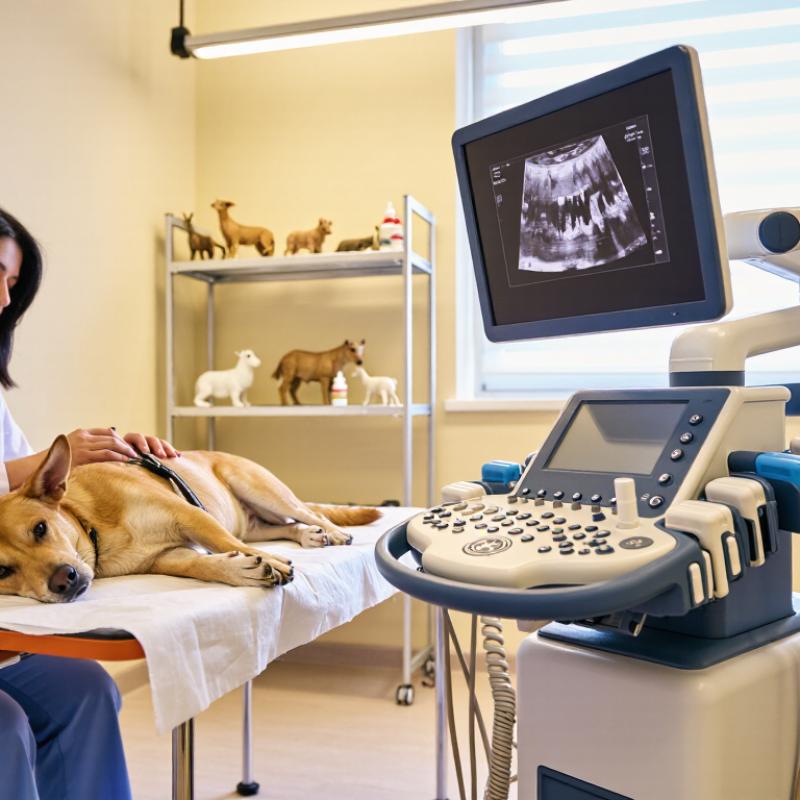
What Is the Best Veterinary Ultrasound Machine from China?

What Defines a High-Quality Veterinary Ultrasound Machine?

A high-quality veterinary ultrasound machine is defined by clinical reliability, not a low purchase price. The AVMA’s 2022 Pet Ownership and Demographics Sourcebook reported about 65.1 million U.S. dog-owning households and 46.5 million cat-owning households. This demand increases the need for dependable abdominal, cardiac, and reproductive imaging.

Image quality comes first. The system should provide clear resolution at shallow and deeper depths, with stable frame rates during cardiac examinations. A practical test uses a liver phantom, small-animal abdomen, and moving cardiac target. Check for edge definition, tissue contrast, and fewer image artifacts. AIUM guidance emphasizes appropriate output controls and trained operation. IEC 60601-2-37 also addresses ultrasonic diagnostic equipment safety.

Workflow matters just as much. A responsive touchscreen, programmable presets, quiet fans, and lightweight probes reduce examination time. Probe durability deserves careful inspection. Ask about crystal failure rates, waterproofing, cable strain testing, and repair turnaround. Documentation should include quality-control records, electrical safety testing, and calibration procedures.

Look beyond the brochure. A 2024 veterinary ultrasound market analysis by MarketsandMarkets projects continued industry growth, but market expansion does not guarantee equal manufacturing quality. Some machines look impressive in demonstrations and disappoint in daily practice. That is uncomfortable, but true. Request local clinical references, sample images, warranty terms, and hands-on evaluation before ordering from China.

Which Veterinary Ultrasound Features Matter Most?

When choosing a veterinary ultrasound machine from China, image quality is only one part of the decision. A clear screen should show liver texture, fetal movement, and small fluid pockets without distracting noise. Adjustable depth, gain, and focus help veterinarians examine dogs, cats, horses, and smaller patients. A lightweight probe matters during farm visits. It should survive disinfectant, transport, and hurried handling. Field experience often exposes weaknesses that brochures hide.

Probe selection deserves careful attention.

A micro-convex probe suits abdominal scans in small animals, while a linear probe helps with tendons, superficial masses, and vascular checks. For equine work, a robust design and adequate penetration are essential.

Doppler modes can assess blood flow, but color alone is not enough.

Spectral Doppler, stable frame rates, and simple controls support more dependable judgments. Ask for raw sample images, not only polished promotional pictures. Request testing on moving patients.

Workflow features can protect clinical accuracy.

Fast booting, quiet fans, long battery life, and easy data export reduce interruptions. DICOM compatibility may matter for hospitals using structured records.

Probe repair support, warranty terms, training, and electrical compliance should be verified before purchase. A low price is attractive, yet replacement probes can change the real cost.

I would also test the keyboard with wet gloves; small controls become frustrating quickly. No machine performs perfectly. Image interpretation still depends on training, patient cooperation, and disciplined scanning technique.

How Do Chinese Veterinary Ultrasound Machines Compare?

What Is the Best Veterinary Ultrasound Machine from China?

Chinese veterinary ultrasound machines now compete strongly on price, portability, and feature density. However, “best” depends on the clinical workload. A small animal clinic may need a 7.5–12 MHz linear probe for superficial structures. A farm practice may require deeper penetration and a durable cart. Cardiac work demands reliable color Doppler, clear ECG tracing, and stable frame rates.

The market is expanding, but reported figures vary. MarketsandMarkets projects the global veterinary ultrasound market to grow at about 6% annually through 2028. Grand View Research also reports mid-single-digit growth through 2030. These figures indicate rising demand, not equal product quality. Some Chinese systems offer impressive imaging for routine abdominal scans. Others show noise, weak Doppler sensitivity, or slow boot times. Small differences matter.

Ask for real clinical images, not only brochure specifications. Test liver texture, bladder edges, and fetal structures on several animals. Check probe heating during extended use. Confirm compliance documentation, electrical safety testing, software updates, and DICOM compatibility. ISO 13485 certification can support manufacturing reliability, but it does not guarantee excellent images. Service is often the weak point. A low purchase price becomes less attractive when a probe repair takes six weeks. I would also examine warranty exclusions and local technical training. The comparison should include total ownership cost, not just the invoice.

How to Choose a Machine for Different Animal Applications?

What Is the Best Veterinary Ultrasound Machine from China?

Choosing the best machine depends on the animal, examination, and working environment. A small-animal clinic may need a compact system with a 5–12 MHz linear probe. Large-animal practice often needs deeper penetration and a durable, portable design. For equine tendon checks, image detail matters more than built-in cardiac features. Reproductive scanning in cattle requires a waterproof probe and a strong battery.

Grand View Research reported that the global veterinary ultrasound market was valued at approximately USD 183.8 million in 2023. It expects steady growth through 2030. These figures vary between reports, so they should not guide purchasing alone. Clinical workflow matters more. Check Doppler sensitivity, image storage, probe compatibility, and software updates. Ask for sample images from dogs, horses, and livestock. A bright screen can be crucial beside a stable window. After-sales training also deserves attention. A low price becomes expensive when calibration or repairs take weeks.

Tips: Match the probe to the deepest target. Test the machine during a real scan, not only a showroom demonstration. Confirm battery life, warranty terms, local service, and DICOM compatibility. If possible, let several veterinarians operate it. Their feedback may challenge your first choice.

What Should Buyers Check Before Purchasing?

Choosing the best veterinary ultrasound machine from China starts with your clinic’s real workload, not a glossy specification sheet.

Before purchasing, define the animals, examination types, and room conditions. A small-animal clinic may need a high-frequency linear probe for tendons and superficial masses. A mixed practice may require a microconvex or convex probe for abdominal scans. Ask for usable depth, image refresh speed, and probe compatibility. Numbers alone can mislead.

Request a live demonstration using comparable patients or test phantoms. Watch how clearly the system shows fluid, tissue borders, and small lesions. Check keyboard response, monitor brightness, cart stability, and cleaning resistance. In a busy room, awkward controls become expensive delays.

Confirm whether Doppler modes are included or sold separately. Also inspect exported images, patient records, and compatibility with your clinic’s storage system. A machine with beautiful images but weak data management may frustrate staff.

Reliability depends on more than the first purchase price. Ask about warranty length, service response times, spare-probe availability, software updates, and operator training. Request written specifications and a sample service agreement. Verify electrical safety documents and import requirements for your location. Speak with current users if possible, especially those scanning similar animals.

I would not trust “hospital-grade” claims without test evidence. My own caution is simple: I sometimes overvalue image sharpness. Ergonomics and after-sales support can matter more during a twelve-hour day. Real examinations are less tidy than demonstrations.

FAQS

What makes a veterinary ultrasound machine a good choice?

It should match the animal, examination type, and working environment. Image quality matters more than a crowded feature list. Test real scans before purchasing.

Which probe suits small-animal clinics?

A 5–12 MHz linear probe usually suits superficial structures in dogs and cats. It can show liver texture, bladder edges, and nearby soft tissues clearly.

What does a farm practice need?

Large-animal work requires deeper penetration, strong battery life, and a durable portable design. A waterproof reproductive probe is useful around cattle and outdoor facilities.

Which features matter for cardiac examinations?

Reliable color Doppler, clear ECG tracing, and stable frame rates are important. Ask to inspect moving cardiac images, not only still pictures.

How should image quality be tested?

Request clinical images from several animals. Scan the liver, bladder, fetal structures, or tendons yourself. Brochure images can look unusually perfect.

Is certification enough to prove quality?

No. Manufacturing certification can support reliability, but it cannot guarantee excellent images or dependable service. Practical testing remains necessary.

What after-sales details should buyers check?

Confirm repair times, warranty exclusions, training, software updates, and local technical support. A probe repair lasting six weeks can disrupt daily work.

How important are battery life and portability?

They matter greatly for field examinations and stable visits. A bright screen helps near a stable window. Carrying comfort matters too.

Should price be the main purchasing factor?

No. Compare the total ownership cost, including probes, repairs, calibration, training, and updates. A cheaper system may become expensive later.

Can several veterinarians help choose the machine?

Yes. Let different users operate it during realistic scans. Their feedback may challenge your first choice. That is useful, even when inconvenient.

Conclusion

Choosing the best veterinary ultrasound machine from China requires more than comparing prices. A high-quality system should provide clear, stable images, dependable penetration, practical controls, and probes suited to the animals being examined. For Ultrasound Machine Veterinary Use, important features include adjustable frequency, multiple imaging modes, efficient battery performance for field work, durable construction, easy cleaning, and software that supports accurate measurements and documentation. Chinese veterinary ultrasound machines can offer competitive functionality and value, but performance may differ between models, so buyers should evaluate specifications and real-world usability carefully.

The right machine depends on the application. Portable systems may be ideal for farm visits and large-animal examinations, while compact cart-based or specialized systems can better support small-animal clinics and detailed abdominal, reproductive, cardiac, or musculoskeletal assessments. Before purchasing, buyers should confirm probe compatibility, image quality, warranty coverage, technical support, training resources, replacement-part availability, and compliance with relevant local requirements. A practical trial, transparent documentation, and a supplier’s ability to provide long-term service are essential for making a confident decision.


Liam

Liam

Liam is a dedicated marketing professional with a profound expertise in the industry, where he excels at highlighting the unique advantages of our core products. With a keen understanding of market trends and consumer needs, Liam frequently updates our company’s professional blog, providing......